

What are digital Twins?
The idea of digital twins – virtual replicas of physical assets that allow for simulation – isn’t new. But what if we flipped the script? Instead of merely mirroring the physical world, we start in the digital world and then create the physical. This “digital-first” approach, exemplified by Nvidia’s Omniverse, is changing how we design, build, and optimise buildings, factories or even develop medicines. Discover Nvidia’s latest technologies in the TechRadar by Devoteam.
Download now: TechRadar by Devoteam
[150 Emerging Technologies for 2025]
The Power of Simulation and Collaboration
Nvidia’s Omniverse allows for the simulation of physical properties, enabling users to visualise and interact with objects in a realistic environment. Imagine simulating gravity on a 3D smartphone to see how it would fall. This capability unlocks powerful use cases:
- Factory Simulation: Simulate “take-back” factories to manage decommissioning processes, accounting for varied incoming items.
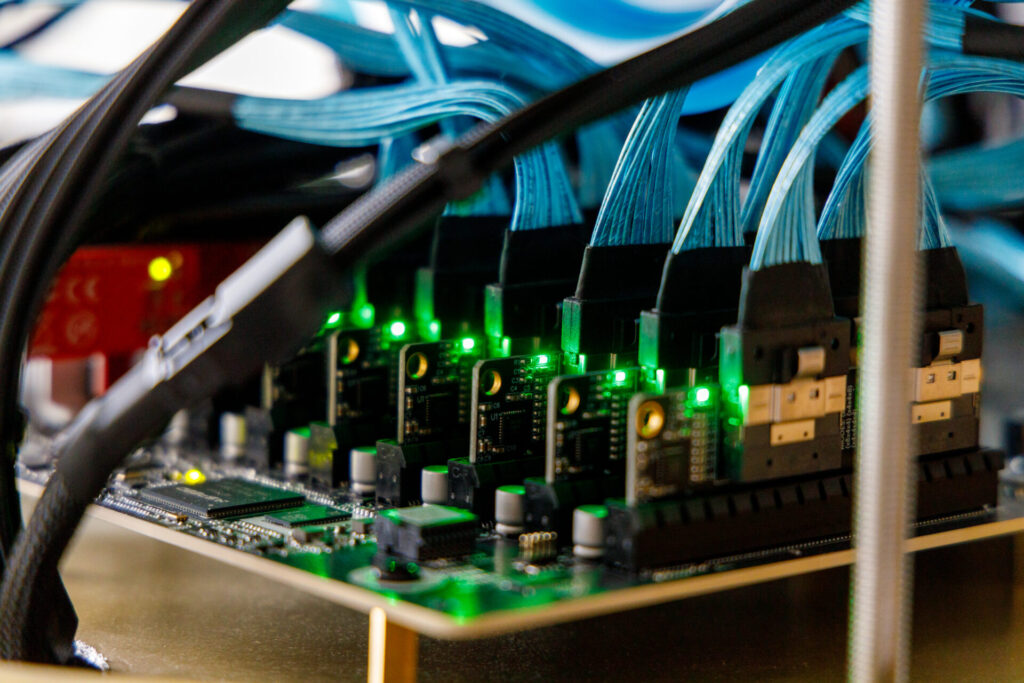
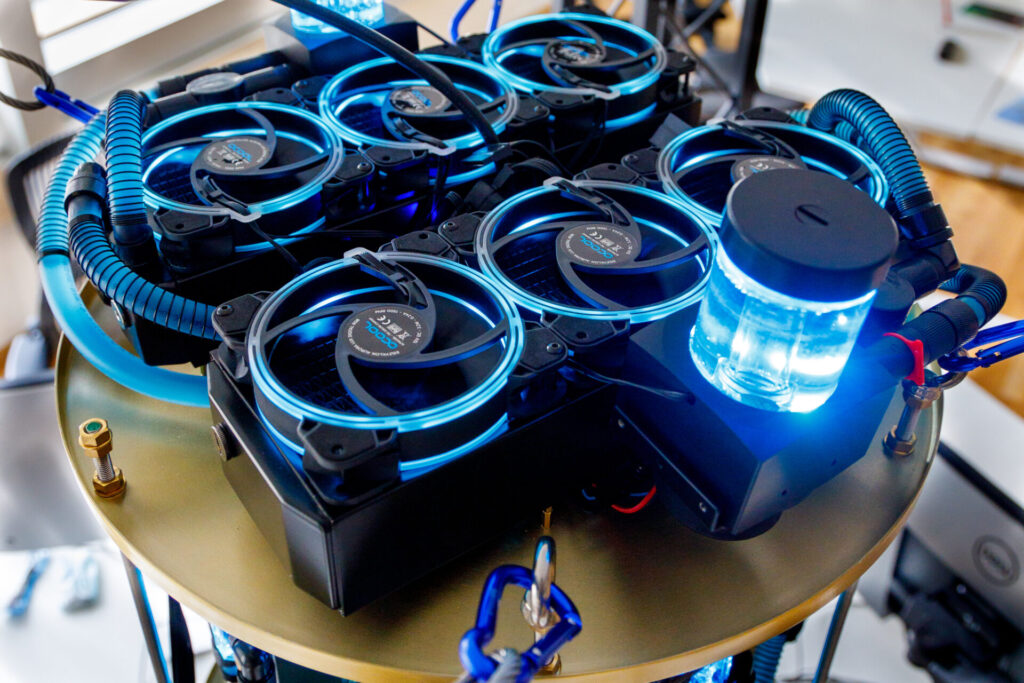
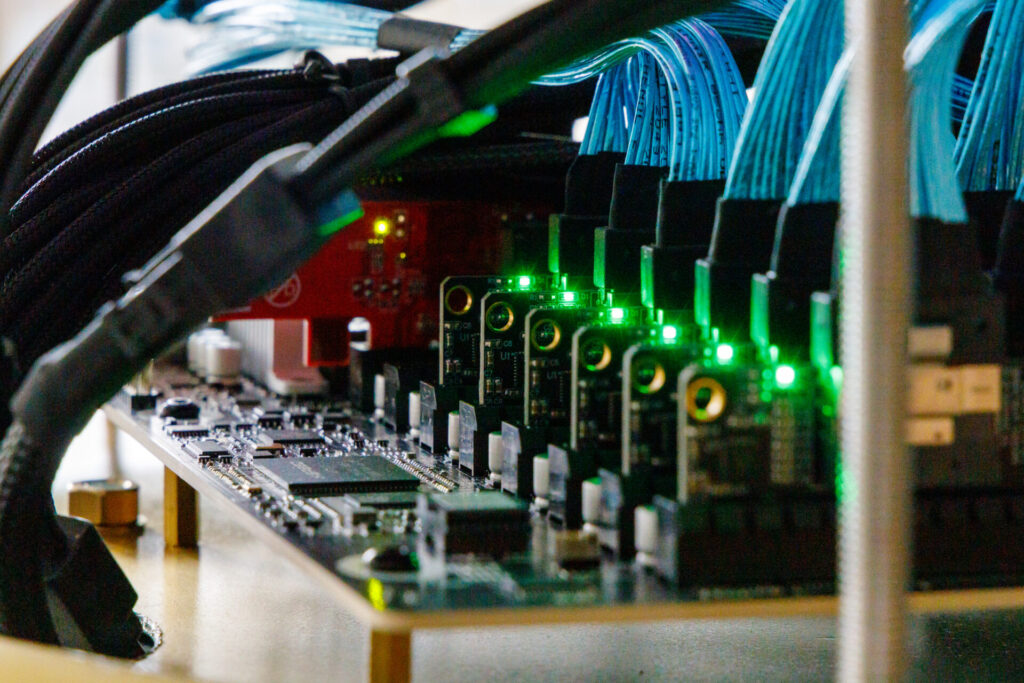
- Data Centre Deployment: One of the most impressive examples of Omniverse in action is the Colossus Supercomputer. This massive facility, which houses 100,000 GPUs, was fully simulated in Omniverse before construction began. This allowed for incredibly efficient construction, with all wiring and configuration completed in just 19 days.
- Infrastructure Optimisation: In Omniverse, replace all type of infrastructure with digital versions to optimise e.g. safety, energy optimisation and predicting CO2 emission savings across the entire value chain.
Replace physical infrastructure components (e.g., valves, pipes, HVAC systems) with digital twins to optimize energy consumption and predict maintenance needs. Simulate the entire infrastructure digitally to identify areas for improvement and potential cost savings.
By working on a shared digital model, teams can collaborate more effectively. Everyone works on the same drawing, dependencies can be drawn together and simulated, and potential issues can be identified before they arise, thus reducing risks.
Nvidia’s Advantage and the Future of World Models
Nvidia stands out with its computing power, essential for AI development and simulations. Today, Nvidia is the leader on compute power, enabling organisations across the globe to develop on top of their hardware.
This allows Nvidia to drive the development of world models: AI-driven robots, trained in simulated environments that are aware of physical constraints. It involves emulating an environment so that a robot can understand how to manoeuvre in a physical environment and be sensitive to different objects and their properties, such as knowing that a plate will break if dropped while a tennis ball can be squeezed.
Conclusion
The “digital-first” paradigm offers significant efficiency gains. The construction of the Colossus data centre, completed in just 19 days due to upfront simulation, highlights this potential. By embracing this approach, businesses can reach new levels of innovation and efficiency. Adding physical properties into digital simulations helps to change how we collaborate and do more than we were capable of doing before.

Ready to light up your AI journey?
Download the TechRadar 2025 by Devoteam
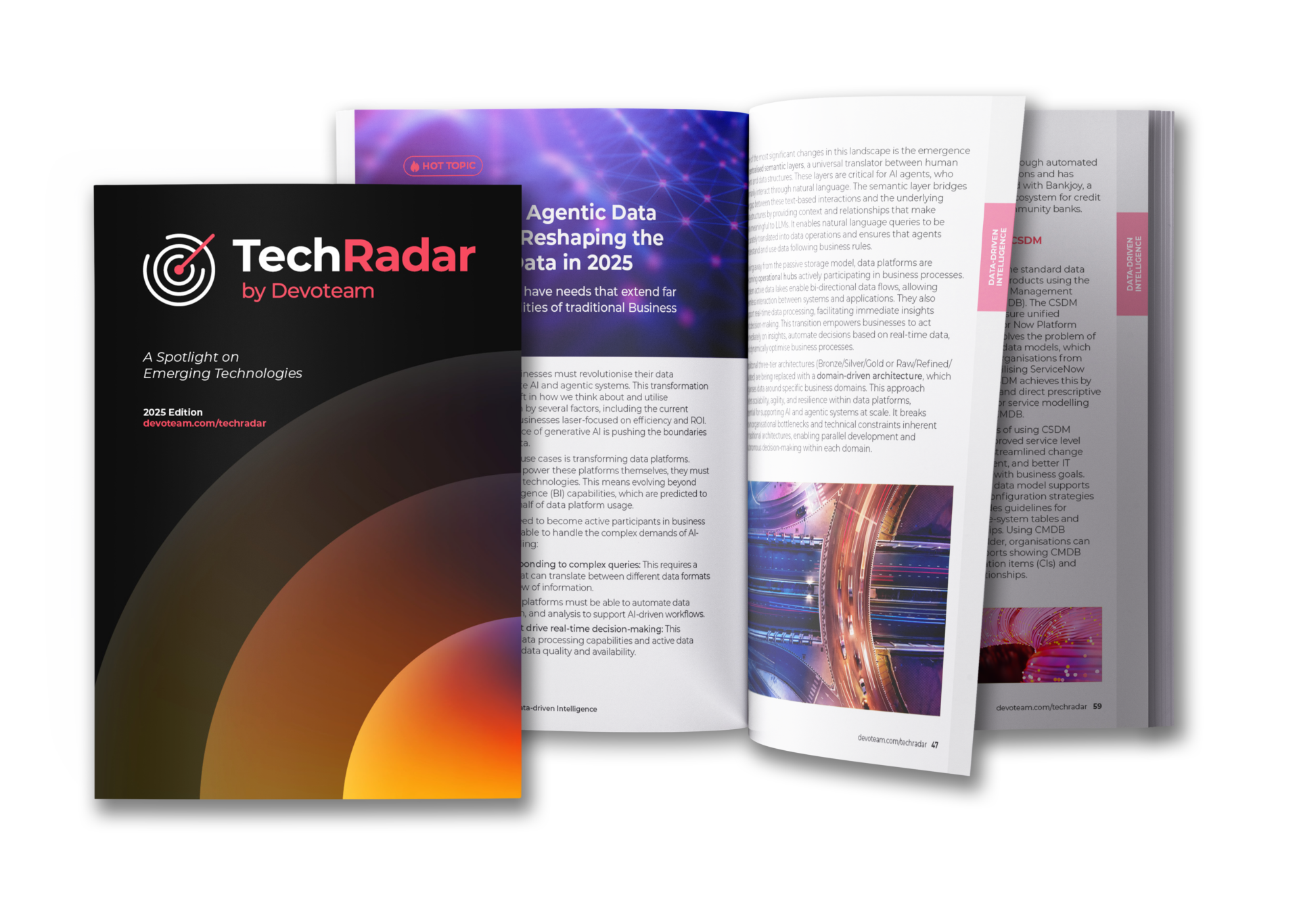
- Explore the 150 difference-making technologies for 2025.
- Discover trends like: Agentic AI, Agentic Data Platforms, AI Augmented Development, AI & Compliance, and AI & Sovereignty and GreenOps.
- Explore how Bouygues Telecom, Vlaio, Société Général, Coca-Cola, and Strawberry are successfully implementing AI to drive digital transformation and deliver impressive ROI.