

This whitepaper introduces Identity-Driven Alert Readiness, a dynamic security model. It leverages the Alert Readiness Framework (ARF) to adjust identity controls such as Access Management, Privileged Access Management (PAM), and Identity Governance and Administration (IGA) based on real-time risk evaluations. This approach enables organisations to proactively mitigate threats, improve resilience, and maintain business continuity.
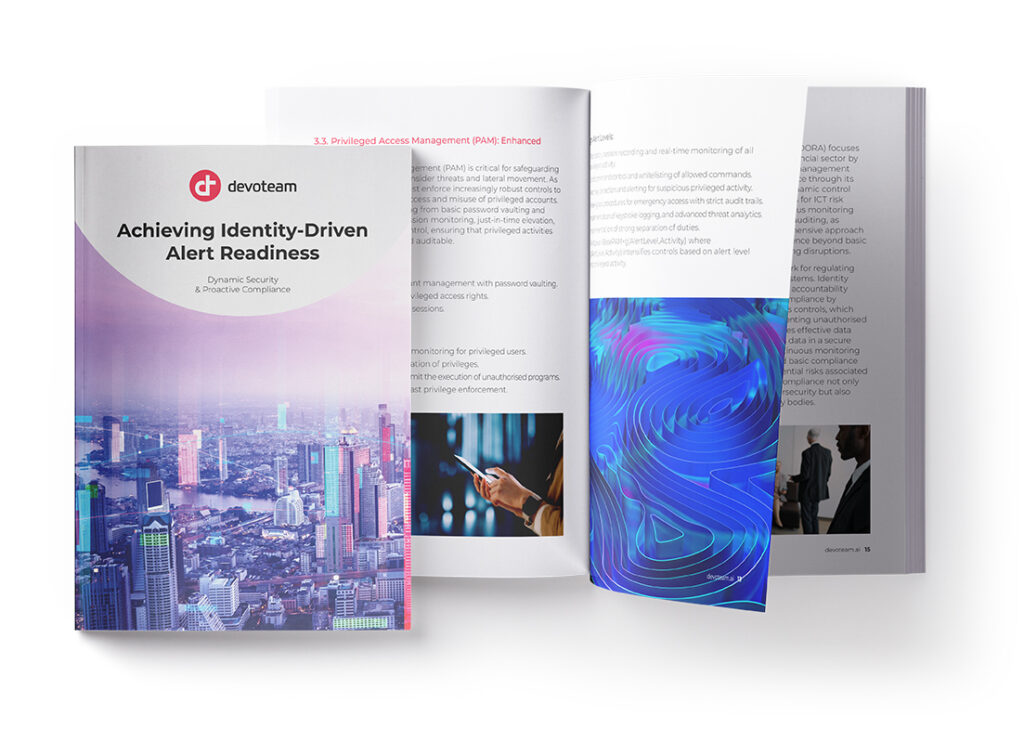
Traditional security models, which depend on binary ‘good’ or ‘incident’ states, are inadequate for today’s escalating cyber threats and complex digital environments. Organisations often react to incidents instead of anticipating them, leaving them vulnerable to disruptions and data breaches. There is a critical need for a more proactive and adaptive cybersecurity strategy.
Content Highlight:
- The evolving threat landscape necessitates a shift from reactive to adaptive security.
- The Alert Readiness Framework (ARF) establishes tiered alert levels for clear communication of cyber risk.
- Identity-Driven Alert Readiness integrates identity controls (IGA, AM, PAM) that dynamically adjust based on ARF alert levels.
- This framework supports compliance with regulations such as NIS 2, DORA, and the EU AI Act by aligning security controls with real-time risk.
- Implementing Identity-Driven Alert Readiness enhances resilience, unifies risk communication, and aligns security with business objectives.