



Introduction
Gemini 3 Pro, Google’s latest flagship AI model, is here. But what does this evolution mean for your business?
Before we dive into the nuts and bolts of Google’s Gemini, we must understand that the AI market is a continuously evolving entity that adjusts according to its potential, needs, and the people driving the technology. Expect this whole discussion to be debated and adjusted as new ideas and trends emerge.
This market evolution is fundamentally a people problem and a leadership challenge. To help you face it, this article will be your guide to the Gemini model evolution, so you can understand which model to bring on board to deliver the ultimate customer and operational experience.
The Evolution of Gemini: A CTO’s Technical Breakdown
Google’s multimodal Large Language Model (LLM) family, Gemini, is moving fast. The shift from the 2.0 generation to the new 3.0 tier is a clear indicator of Google’s long-term technical strategy: agentic specialisation and integrated capabilities.
The table below breaks down the key technical bets and their target use cases, allowing you to recognise which model is most suitable for your business’s needs:
| Model | Release Date | Primary Focus | Key Features & Assessment | Target Use Case |
| Gemini 2.0 Flash | February 5 2025 | High efficiency & multi-modal reasoning. | A strong balance of speed and performance in the 2.0 generation. Ideal for high-frequency tasks at scale and capable of multimodal reasoning. | Real-time applications, content generation (drafts, social media), and as a default model for general use. |
| Gemini 2.0 Flash-Lite | February 25 2025 | Cost-efficient & Latency-optimised. | Fastest and most cost-efficient in the 2.0 family. Excels at high-volume text output where minimal latency and cost are key. Has multimodal input capabilities. | High-volume, low-latency applications like simple chatbots and summarisation needs, plus cost-sensitive API calls. |
| Gemini 2.5 Pro | June 17 2025 | Advanced reasoning. | Google’s most advanced reasoning model prior to the 3.0 launch. Prioritises depth, logic, and accuracy over speed. Excels at complex, multi-step problems and advanced coding. | High-stakes tasks, complex research, technical writing, code review, and advanced reasoning/logic problems. |
| Gemini 2.5 Flash-Lite | July 22 2025 | Optimised for cost-efficiency. | Successor to 2.0 Flash-Lite, improving performance while maintaining a focus on cost-efficiency. Reports indicate it “punches above its weight” for tool-calling capabilities. | High-volume, cost-constrained applications such as Internet of Things (IoT) sensors and low-complex agentic tasks. |
| Gemini 2.5 Flash | August 25 2025 | Image generation with advanced editing capabilities. | A major upgrade over 2.0 Flash, featuring the ‘Nano Banana’ model. This is Google’s state-of-the-art image generation and editing model. | Generate and edit images with rich functionality: blend multiple images, maintain character consistency, and make targeted transformations using natural language. |
| Gemini 3 Pro | November 18 2025 | Designed for agentic AI. | The latest flagship, built for agentic solutions. State-of-the-art reasoning, with an optional “Deep Think” mode. Features native, world-leading multimodal understanding. | Building complex AI agents, advanced engineering/coding (agentic coding), deep analytical tasks, and workflows requiring world-class multimodal interpretation. |
Surfacing the Technical Trends
Based on the breakdown of each Google Gemini model, I can identify a few technical trends, including:
- The Trade-off is Clear: The models consistently offer a clear trade-off: Flash for speed and cost, Pro for complexity and precision. As a CTO, I encourage people to build things for scale and quality, and choosing the right model is foundational to that goal.
- Performance Leap: Each new generation (2.5 over 2.0, and 3 over 2.5) demonstrates a significant increase in capability, especially in core areas like reasoning and handling complex, long-context prompts.
- True Multimodality: The models are becoming increasingly proficient at native multimodality, meaning they can process and reason across various inputs like text, images, video, and audio simultaneously. Gemini 3 Pro marks a major step forward, particularly in video and screen understanding.
- Agentic Capabilities: The newer models, especially Gemini 3 Pro, are explicitly designed with enhanced agentic capabilities. They are built to plan, complete multi-step tasks, and integrate tools (like ServiceNow and Jira) more effectively.
Gemini 3 Pro: The Agentic Flagship Model
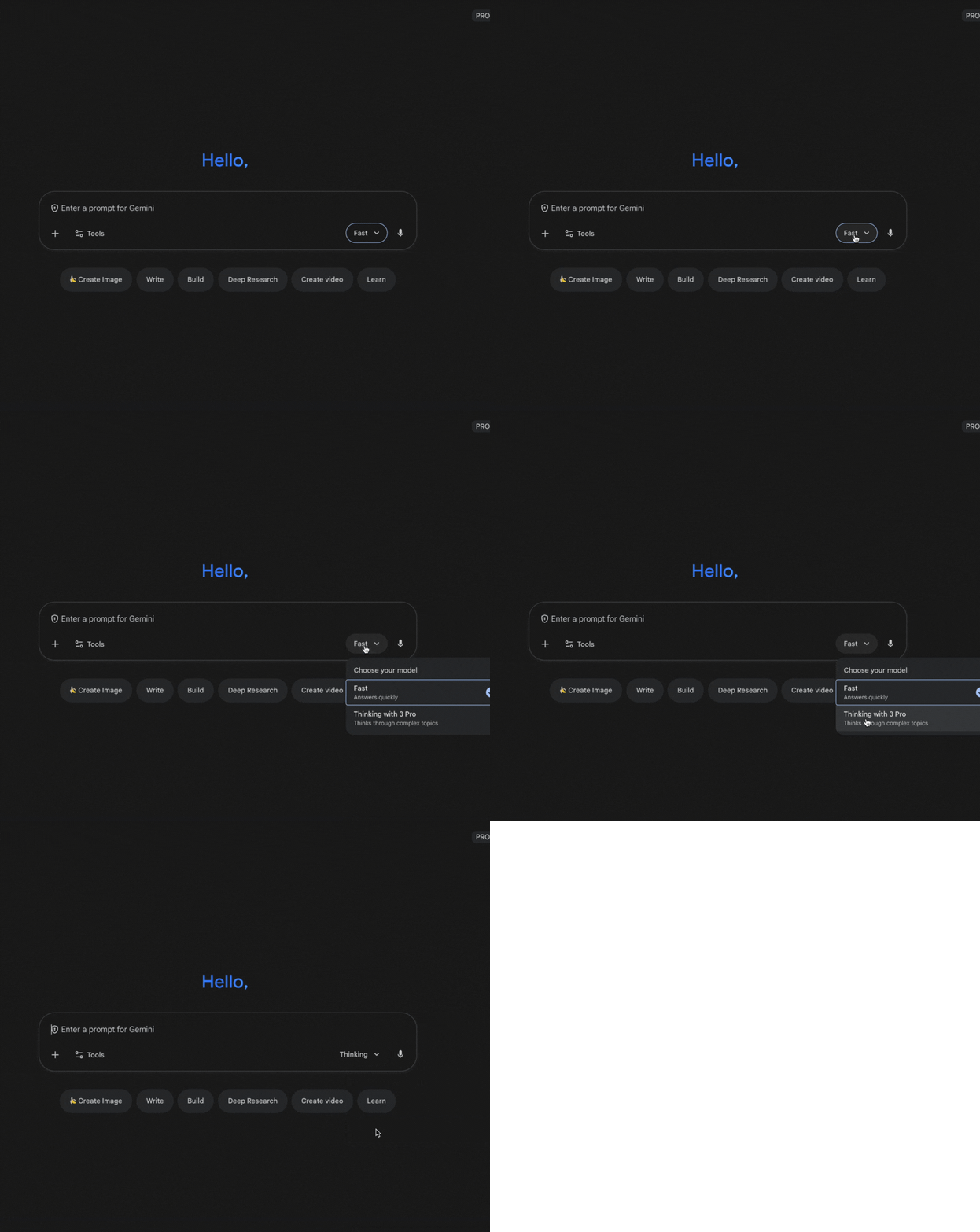
What is Gemini 3?
Gemini 3 Pro model, it is Google’s latest flagship AI model designed specifically for agentic AI solutions. This model is considered to be the beginning of the Gemini 3 era. The release date for Gemini 3 Pro was November 18, 2025.
How to get Gemini 3?
Gemini 3 will power various Google products and solutions. If you are a Gemini Pro or Ultra user, you will see it in your Gemini app. Developers can build with Gemini 3 through Google AI Studio, Gemini Enterprise, Vertex AI, Gemini CLI and the new agentic development platform, Google Antigravity. The newest model is also available in third-party platforms like Cursor, GitHub, JetBrains, Manus, Replit and others.
Gemini 3 Pro Features
- State-of-the-Art Reasoning and Multimodality
Gemini 3 uses its multimodal understanding and state-of-the-art reasoning to simultaneously analyse text, video, and files.
Use Case Examples: This model allows us to go beyond simple text processing. We can now look at Analysing X-rays and MRI scans to assist in faster diagnostics, or assessing streams of machine logs and video footage to predict equipment failure before it occurs. - Powerful Agentic Coding and Front-End Creation
This model transforms application development and design, giving our engineers new superpowers. Enterprises can rapidly prototype complete front-end interfaces with a single prompt and leverage agentic coding to move from prototype to production with speed and confidence. - Advanced Tool Use and Planning
Gemini 3 Pro enables advanced reasoning with diverse tools, facilitating complex, multi-step tasks across enterprise systems and data. This allows for autonomous task execution that can make a major impact such as supply chain adjustments, insurance claim submissions, and the creation of specific product descriptions.
Seamlessly Incorporate Gemini by Partnering with Devoteam
To successfully adopt Gemini, your teams need a partner that understands the entire project landscape. Devoteam has the comprehensive expertise to guide your business with this approach:
- Identify the Relevant Use Cases for Gemini: Outlining how Gemini can solve the current pain points.
- Create a Strategy for Integration: Mapping out how Gemini can be seamlessly integrated into your business’s technical ecosystem.
- Provide Expert Guidance: Assisting your teams on developing, launching and scaling your Gemini-powered solutions.
- Offer Ongoing Support: Serving as your trusted Gemini advisors.
Explore how Strawberry enhanced guest experiences by coupling Gemini with Devoteam’s expertise.
Conclusion
The fast-moving evolution of the Gemini models, from the efficient Flash to the agentic Pro, demonstrates Google’s commitment to specialised, best-in-class AI. By choosing the right model for the right task, your business can achieve its objectives and build things for scale and quality.
Get in touch with Devoteam to discuss how Gemini can help your business.
Discover what the AI Agent Trends
mean for your business
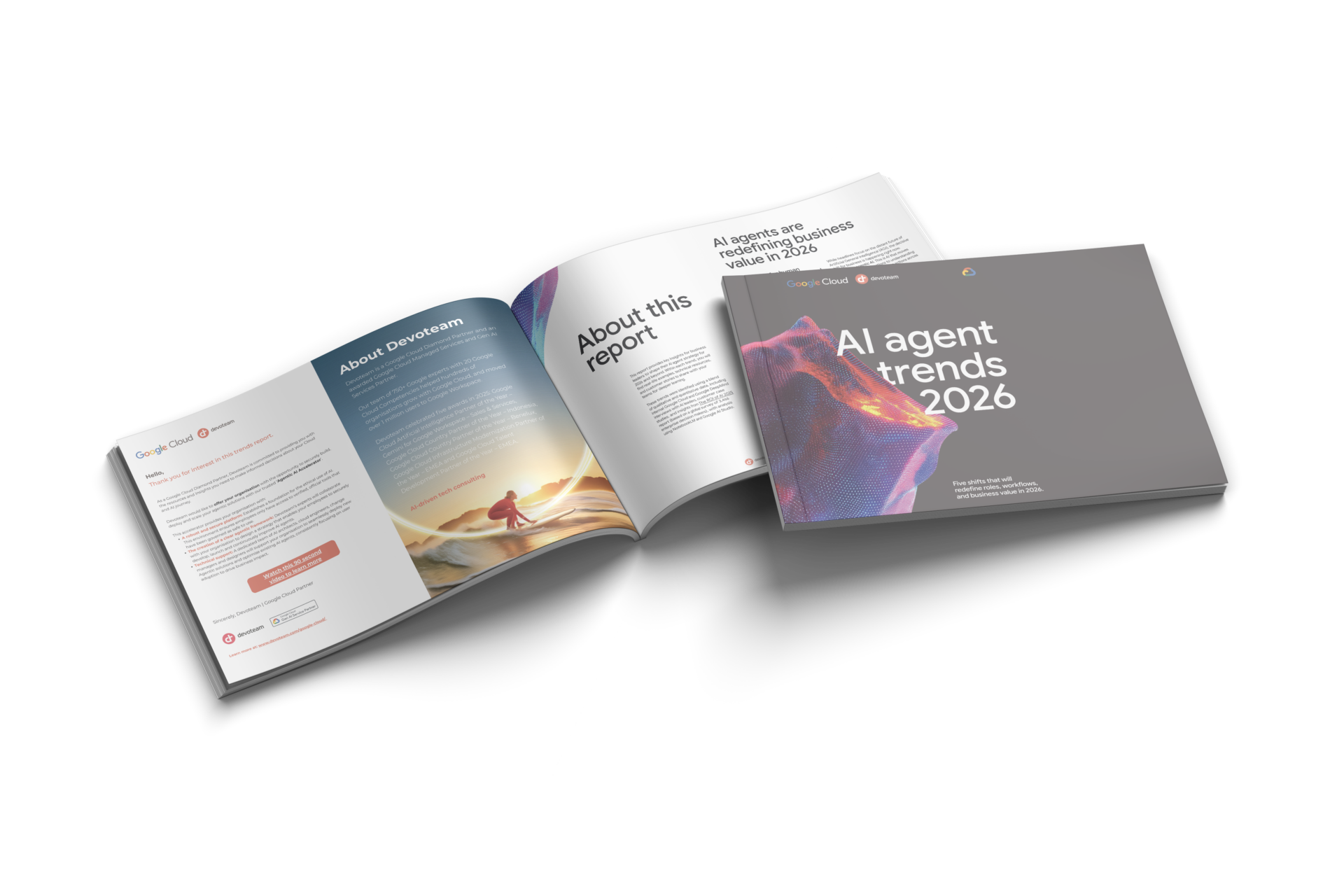
Download the report to find out:
- How the 2026 trends can shape your organisation’s agentic AI strategy.
- Practical examples on how to deploy agents across your enterprise.
- A series of adoption techniques to empower staff to use agentic AI.