


Having recently completed a major Microsoft migration to AWS, we have taken the time to reflect upon the role that the Well-Architected Framework played during that engagement.
What is the AWS Well-Architected Framework?
AWS Well-Architected is a framework for deploying and operating in the Cloud. The framework is often used to review existing Cloud operating environments and provide a much-needed benchmark against prescribed best practices.
It provides structured guidance based on six key pillars:
- Operational Excellence
- Security
- Reliability
- Performance Efficiency
- Cost Optimisation
- Sustainability
The framework is often used through a formal process called the Well-Architected Framework Review (WAFR) — a technical deep-dive into an existing or planned AWS environment, conducted by AWS-certified experts.
This review identifies misalignments, risks, and opportunities for improvement — and produces a prioritised remediation roadmap. Many businesses uncover issues they weren’t even aware of.
At Devoteam, we embed Well-Architected into every aspect of a migration. We see it as our North Star – a constant, dependable guide to ensuring that our clients leverage AWS to its fullest extent, based on all options available to them.
When it comes to migrating to the Cloud, we leverage the Well-Architected Framework as we plan forward. We see this as a crucial driver for success.
Four Migration Areas for Reflection
So, exactly how did Well-Architected help us in our most recent customer migration project? We identified four distinct areas for reflection:
1. Building Confidence in the Cloud
Organisations often find moving to the Cloud a daunting prospect.The following two factors are usually to blame for this:
- First: there is still a common misconception that the Cloud is not mature enough to operate mission-critical applications; this tends to arise while organisations begin defining their migration business case.Well-Architected demonstrates this maturity – that the organisation’s journey is not unique and has been successfully undertaken before. It provides reassurance that there is a route to “Operational Excellence” on the AWS Cloud, fit enough for even the largest enterprises.
- Second: the vast array of services and solutions provided by AWS, can make it hard to even know where to begin.The Well-Architected Framework, and especially the review process, provides a way to assess the technologies available, acting as a guide to selecting the most appropriate architecture to support a specific use case.
2. Designing a Target Architecture
The planning stage of the migration focuses on collecting and interpreting information regarding your current operations, aiming to outline a suitable design for the future state. Of course, the flexibility offered by the Cloud makes it possible to deploy to AWS without this level of planning. However, in our experience, this usually leads to complications downstream – in particular with cost optimisation, performance, and scalability. The devil is in the detail.Using the Well-Architected Framework as a guide, your engineers can design a future-state AWS environment to fully leverage the services available and maximise the benefits of operating in the Cloud. The design can then be reviewed and improved against the principles of Well-Architected before any deployment takes place.
3. Preparing the Foundations Before You Migrate
The initial step in launching AWS services, as part of a migration, is to deploy your Landing Zone. This forms the foundations for your Cloud environment – a set of AWS services and technologies which will help to ensure your AWS workloads and accounts are secure and centrally governed.Put simply, the Landing Zone must facilitate security and reliability, provide visibility of workloads in operation, and enable scalability and performance.Well-Architected provides prescriptive guidance regarding these foundational elements of your AWS infrastructure. It should become your benchmark when deploying your Landing Zone.
4. Reviewing the Operation of the Environment Following the Migration.
Following the migration, and once your workloads are fully functioning in production, it is often tempting to simply close the project and resort to BAU operations. However, you should plan to retain some of your engineers so they can perform a post-launch evaluation of your migrated workloads, observing performance, costs, scalability, error rates, downtime, and resilience.
A Well-Architected Framework Review (WAFR) is recommended at this stage. Reviews can be conducted internally or by an AWS Partner if you wish. The review will serve to highlight key areas of improvement, and provide a list of ranked remediation activities, which enable you to observe and bridge the gap to Well-Architected if there is one.
At this point, you should be looking at cost optimisation opportunities. Monitoring and managing the cost of your Cloud infrastructure is a main theme of the Well-Architected Framework; it will guide you to help right-size your AWS services, consider modernisation options and identify more cost-effective purchase options that may be available.
When should you request a WAFR?
- After cost spikes or incidents – understand root causes.
- Before migration or a major change – validate the plan.
- Pre-production – confirm go-live readiness.
- Post-migration – baseline risks and costs in real usage.
- Before audits/compliance reviews – close gaps early.
Having helped hundreds of organisations to adopt Well-Architected, our experienced team at Devoteam has embedded the framework into our standard migration methodology. We advise that you adopt the same approach and take time to understand and leverage AWS-recommended best practices throughout your migration project. Want to know more? Get in touch.
Maximise Your Cloud Benefits with AWS
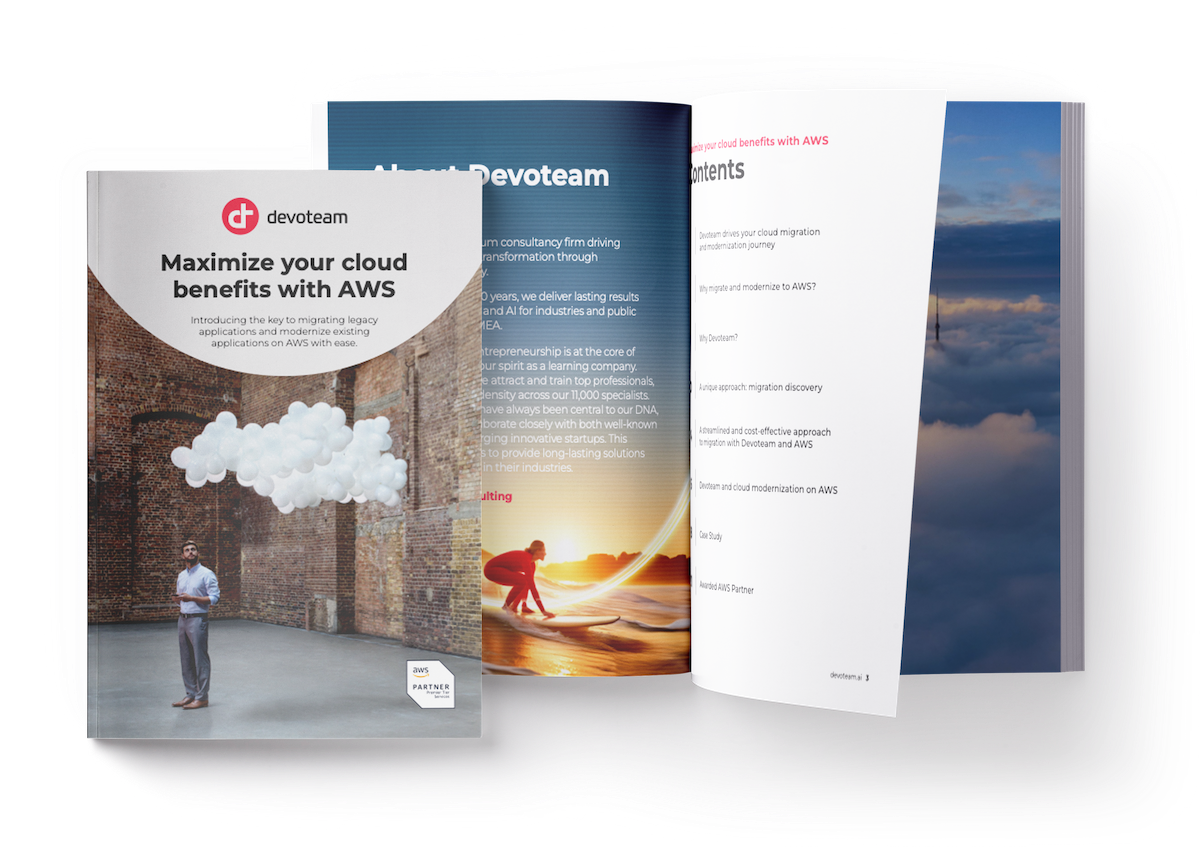
Ready to migrate to AWS but unsure where to start? Learn how to avoid common migration pitfalls and achieve real business transformation.
- Plan your migration properly, focusing on business value
- Connect cloud strategy to your business goals
- Prepare your organisation for successful transformation
To learn more on this subject, please read:

Get your free Well-Architected Review
We offer you this review to kick off a lasting improvement cycle. We help you benchmark your current maturity, unlock quick wins, and lay the groundwork for secure, scalable, cost-efficient operations.