


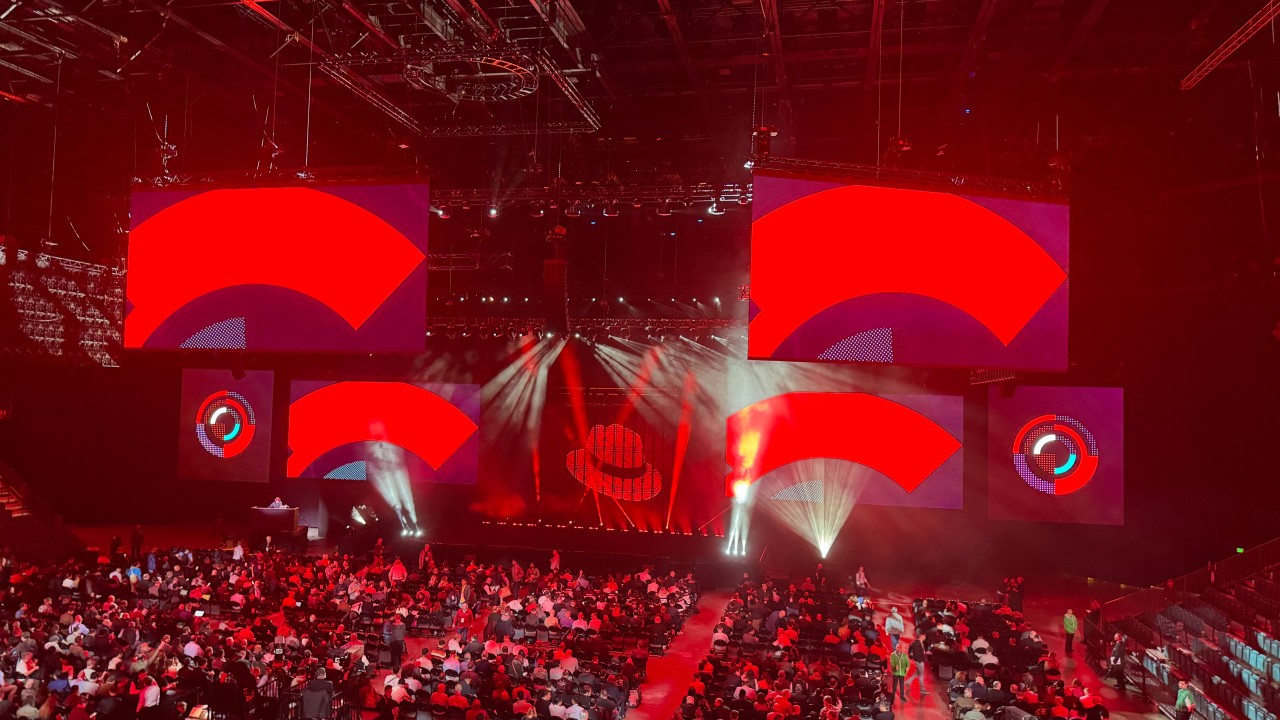
We (Killian Kaeses, Cloud Native Platform manager at Devoteam Belgium) just got back from Red Hat One 2025 in Las Vegas—where the city’s motto might be “What happens in Vegas stays in Vegas”, but trust me, the game-changing innovations I saw are too good to keep secret.
As a Red Hat Premier Partner, we had the privilege of getting an inside look at the latest advancements shaping IT from AI-powered automation to the future of virtualization beyond VMware.
And let’s be clear: these aren’t just upgrades, they’re paradigm shifts.
At Red Hat One, we saw firsthand how the strongest IT strategies for 2025 and beyond will be built on three key pillars:
✅ AI that works for IT
✅ A real VMware alternative with OpenShift Virtualization
✅ Mission-critical automation with Ansible
Let’s break it down.
1. Red Hat AI: AI That Works for IT, Not the Other Way Around
There’s no escaping it: AI is transforming IT but the biggest challenge isn’t the technology, it’s how to integrate AI into existing workflows without creating new silos or vendor lock-in.
At Red Hat One, the focus was on AI that enhances IT operations, automates processes, and empowers teams to do more with less.
? Red Hat OpenShift AI delivers a scalable, open-source AI platform designed for enterprise workloads—so you can train, deploy, and manage AI models without the vendor lock-in of hyperscaler AI solutions.
? RHEL AI: AI at the Edge and On-Prem – Red Hat Enterprise Linux is now AI-enabled, allowing businesses to deploy, fine-tune, and run AI models directly on RHEL.
? AI-driven automation for IT operations (AIOps) is reducing outages and improving system reliability, helping companies predict and resolve incidents before they even happen.
For businesses looking to harness AI without handing over control to a hyperscaler, Red Hat AI is a future-proof choice.
Why This Matters:
✅ AI isn’t just for data scientists anymore—IT teams can now leverage AI for smarter automation, monitoring, and optimization.
✅ Avoid cloud lock-in by running AI workloads in OpenShift, keeping control over costs, data, and compliance.
✅AI-powered predictive maintenance and security are becoming must-haves, reducing risk and downtime.
2. VMware Exit Strategy: The Clock is Ticking
Let’s talk about the elephant in the data center: VMware.
With Broadcom’s acquisition, we’re seeing a mass migration as businesses look for an alternative before another cost increase or licensing shake-up. Red Hat One confirmed what we’ve been seeing in the field:
? OpenShift Virtualization is the way forward—offering a smooth transition from VMware while integrating VMs and containers on a single platform.
? The Migration Toolkit for Virtualization (MTV) makes moving workloads at scale easy, reducing downtime and simplifying the transition from vSphere to OpenShift.
? Live migration, high availability, and dynamic resource scheduling—all the things you rely on VMware for? They’re already here in OpenShift Virtualization.
? Cost savings: Running VMs on OpenShift removes the dependency on vSphere, NSX, and vSAN, eliminating costly licenses while giving you full control of your infrastructure.
Why This Matters:
✅ If you’re using VMware today, your renewal costs are about to get even more unpredictable.
✅ OpenShift Virtualization provides a modern, cloud-ready alternative that supports both traditional and cloud-native workloads.
✅Migrating isn’t just about avoiding higher costs—it’s about building a future-proof infrastructure that integrates VMs and containers seamlessly.
3. Mission-Critical Automation: Because IT Has Better Things to Do
IT teams don’t have time for manual, repetitive tasks—and at Red Hat One, it was clear that the future of enterprise IT is automated, intelligent, and event-driven.
? Ansible Automation Platform is now the industry standard for automating infrastructure, security, networking, and cloud deployments.
? Event-Driven Ansible is a game-changer—automating responses to IT incidents in real time, ensuring fast resolution and reducing human intervention.
? Self-service automation is unlocking true DevOps agility, allowing developers, security teams, and operations to provision what they need, when they need it—without waiting on IT.
Why This Matters:
✅ Automation isn’t a “nice-to-have” anymore—it’s a business necessity.
✅ Manual processes slow down innovation, security, and efficiency—Ansible ensures your team works smarter, not harder.
✅With AI-driven automation, companies can prevent issues before they happen, rather than reacting to them.
4. What This Means for You
At Devoteam, we’re not just watching these changes—we’re bringing them directly to our customers.
Whether you’re:
✅ Exploring AI to optimize IT operations,
✅ Planning a VMware migration to OpenShift Virtualization, or
✅ Looking to scale automation with Ansible…
We’re here to help you build the right strategy, reduce costs, and future-proof your IT stack. Want more information? See what Devoteam Belgium does with Databricks here.