

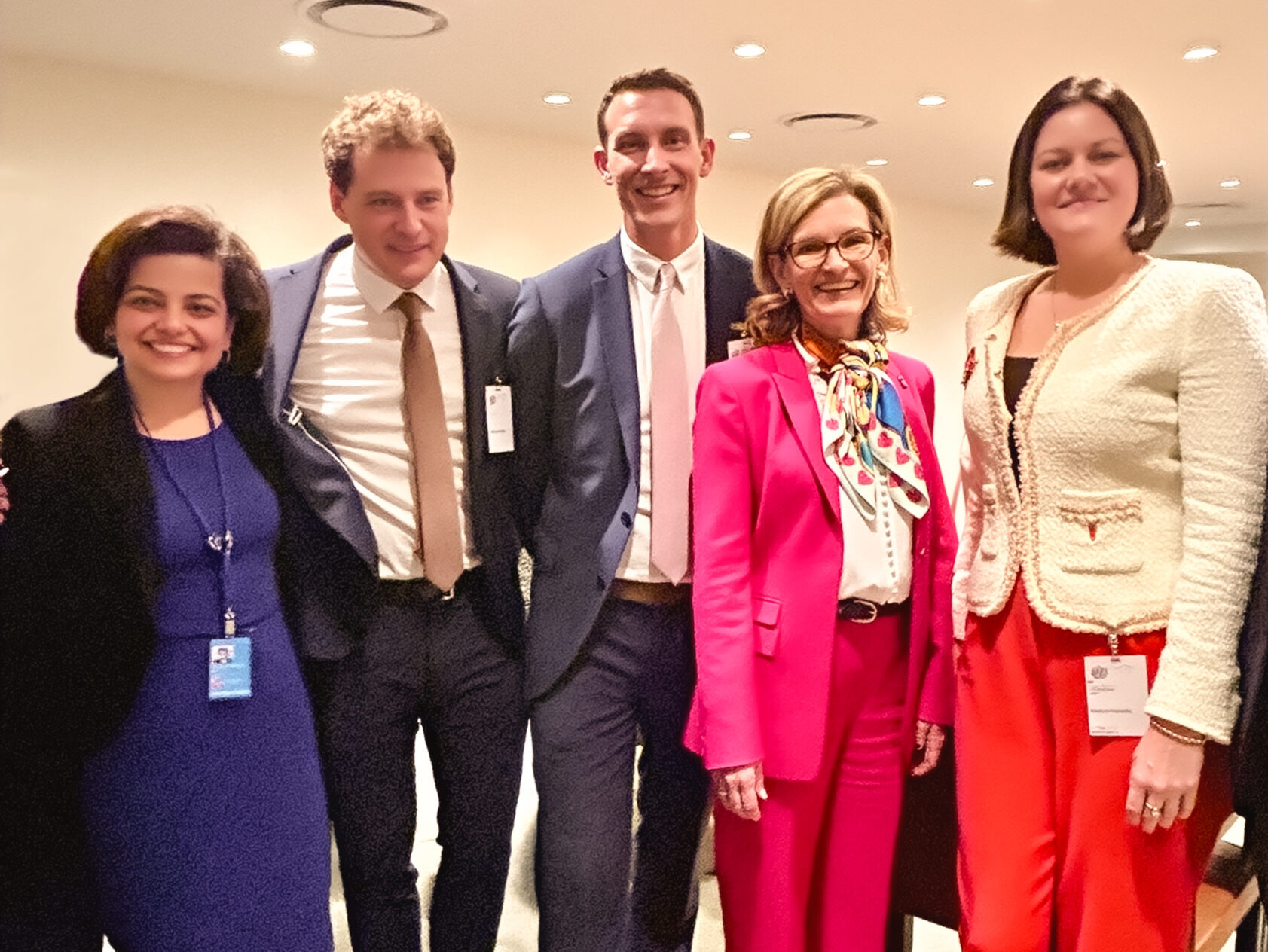
Devoteam recently organised an AI workshop at the 69th Session of the Commission on the Status of Women (CSW69) at the United Nations General Assembly in New York. This initiative highlighted a collaborative approach to digital safety and ethical AI integration, addressing global challenges within the UN ecosystem, particularly influencing gender equality through a technological lens. The workshop aimed to raise awareness of AI risks for women and girls, with a report summarising findings to inform policymaking across UN member states.
As Tristan Van Thielen, AI & ML Expert at Devoteam, succinctly puts it, “While AI presents numerous opportunities, it also poses risks, particularly to vulnerable populations. It’s essential to ensure everyone is aware of these risks and empowered to adjust their practices.” This sentiment underscores the core challenge: harnessing AI’s transformative power responsibly and equitably.

While AI presents numerous opportunities, it also poses risks, particularly to vulnerable populations. It’s essential to ensure everyone is aware of these risks and empowered to adjust their practices.

Tristan Van Thielen,
AI & ML Expert at Devoteam
A Forum of Global Influence: The Significance of CSW69
The 69th Session of the Commission on the Status of Women (CSW69) is the preeminent global intergovernmental body dedicated to gender equality and women’s empowerment. Its gatherings unite global leaders and policymakers from across the UN ecosystem, and any agreements made profoundly impact policy-making across all UN member states.
Devoteam supported a side event workshop, “AI: A Transformative Force for All Women & Girls,” on March 11, 2025, alongside the International Telecommunication Union (ITU) and Soroptimist International. Strategically positioned at CSW69, this event addressed the critical intersection of technology, societal progress, and digital safety, aiming to raise awareness of AI-related risks and opportunities.
Discussions, attended by high-level policymakers including the Secretary-General of the ITU, Doreen Bogdan-Martin, and the President of ECOSOC, Bob Rae, underscored the urgent need to integrate cyber safety into AI utilisation. As Tania Gómez Herazo, Expert Director at Devoteam Belgium, observed, “The discussions highlighted the urgent need to integrate cybersecurity into AI usage, leading to a proposed rollout of education programmes to inspire policymakers across UN member nations.” The workshop’s outcomes are poised to significantly contribute to Sustainable Development Goals (SDGs) and advance the Beijing 30+ 12 Critical Areas, fostering a more inclusive and secure digital future.
The discussions highlighted the urgent need to integrate cybersecurity into AI usage, leading to a proposed rollout of education programmes to inspire policymakers across UN member nations.

Tania Gómez Herazo
Expert Director at Devoteam Belgium
Empowering Voices: A Collaborative Workshop Methodology
Unlike traditional top-down presentations, this workshop adopted an innovative, audience-centric approach. The objective was to empower diverse stakeholders from government, civil society, academia, youth fora and the private sector to actively shape outcomes. Devoteam’s facilitators provided a guiding framework, but the true ‘how’ lay in the collective intelligence of the room.
Through a facilitated, interactive process, participants shared perspectives, identified critical AI and cyber safety pain points, and collaboratively prioritised actions. This ensured the resulting report was a distillation of shared concerns from those on the front lines of digital transformation. The focus coalesced around integrating cyber safety and awareness into upskilling initiatives, recognising it as the most pressing issue for broad societal impact.
This collaborative discovery led to a comprehensive roll-out of education programmes designed to inspire policymakers across UN member nations. The report, summarising these findings, testifies to the power of collective engagement in addressing complex global challenges.
A Lasting Impact: Shaping Policy and Practice
The report generated from this workshop is a strategic document intended to have a lasting impact on policy and practice. Disseminated to policymakers and influencers within the UN ecosystem, it serves as a crucial resource for prioritising cyber safety education in AI development. Its insights are designed to inform legislative changes and programmatic initiatives, ensuring ethical considerations and digital safety are at the forefront of national and international AI strategies.
Devoteam’s commitment to “Tech for People” underpins this initiative, emphasising building safety into every AI application. As Simon Ruszala, Devoteam’s Group Learning Director, articulates, “We believe in ‘Tech for People’ and ensuring that technology, including AI, is used as a tool for good. We acknowledge our responsibility to build safety in every aspect of our applications, and for that, AI literacy is a critical topic.” Our internal AI literacy programmes, mirroring the UN report’s tiered cyber safety training, are designed to meet diverse needs, from basic digital literacy to advanced AI security, empowering individuals to navigate the digital landscape securely.
We believe in ‘Tech for People’ and ensuring that technology, including AI, is used as a tool for good. We acknowledge our responsibility to build safety in every aspect of our applications, and for that, AI literacy is a critical topic.

Simon Ruszala,
Group Learning Director at Devoteam
Tristan Van Thielen further emphasises the practical application: “Tiered cyber safety training programmes are essential to meet diverse needs, ranging from basic digital literacy to advanced AI security. We are developing training programmes with different levels of complexity, ensuring essential concepts like ethical guardrails, password security and recognising online threats are covered, alongside advanced AI-powered tools and data privacy.”
Devoteam extends its AI enablement expertise to other organisations, advocating for a multi-stakeholder approach that includes:
- Tiered Cyber Safety Training Programmes: Tailoring programmes for accessibility.
- Integrated Cyber Safety Modules: Embedding modules into existing empowerment and educational programmes.
- Localised Resources: Developing culturally and linguistically appropriate materials.
- Personalised Campaigns: Using AI to tailor awareness messages.
Tania Gómez Herazo highlights the broader adoption: “We believe these principles should be adopted across all organisations implementing AI, especially those in the education sector. We advocate for a multi-stakeholder approach to ensure widespread and effective integration.”
This proactive approach, coupled with ongoing evaluation, positions Devoteam as a key player in fostering a future where AI empowers all and contributes to a safer, more equitable digital environment globally. The collaborative spirit of the CSW69 workshop and its resulting report exemplify how collective action drives meaningful progress in the intelligent era.