



Estimated reading time: 6 minutes
Artificial intelligence is no longer just a tool we use to gain efficiency or automate simple tasks. It is emerging as a new type of digital collaborator. And that’s all due to AI agents. This change poses an unprecedented cultural and organisational challenge. If AI can already plan, execute, and learn, are we truly prepared to lead it? Do we have the skills, mindset, and strategy to become the true boss of AI agents?
The Current Context: Lack of Time, Excess of Tasks
The Work Trend Index 2025 , published by Microsoft and LinkedIn, reveals an alarming fact: 8 out of 10 employees say they don’t have the time or energy to complete their daily tasks. At the same time, more than half of business leaders aim to boost their teams’ productivity.
The conclusion is clear: the current model is reaching its limits. Demanding more human effort is unsustainable. The solution lies in freeing up time and energy through the intelligent use of technology, and that’s where generative artificial intelligence, and especially AI agents, come into play.
Gartner predicts that by 2028, 15% of day-to-day work decisions will be made autonomously by AI agents
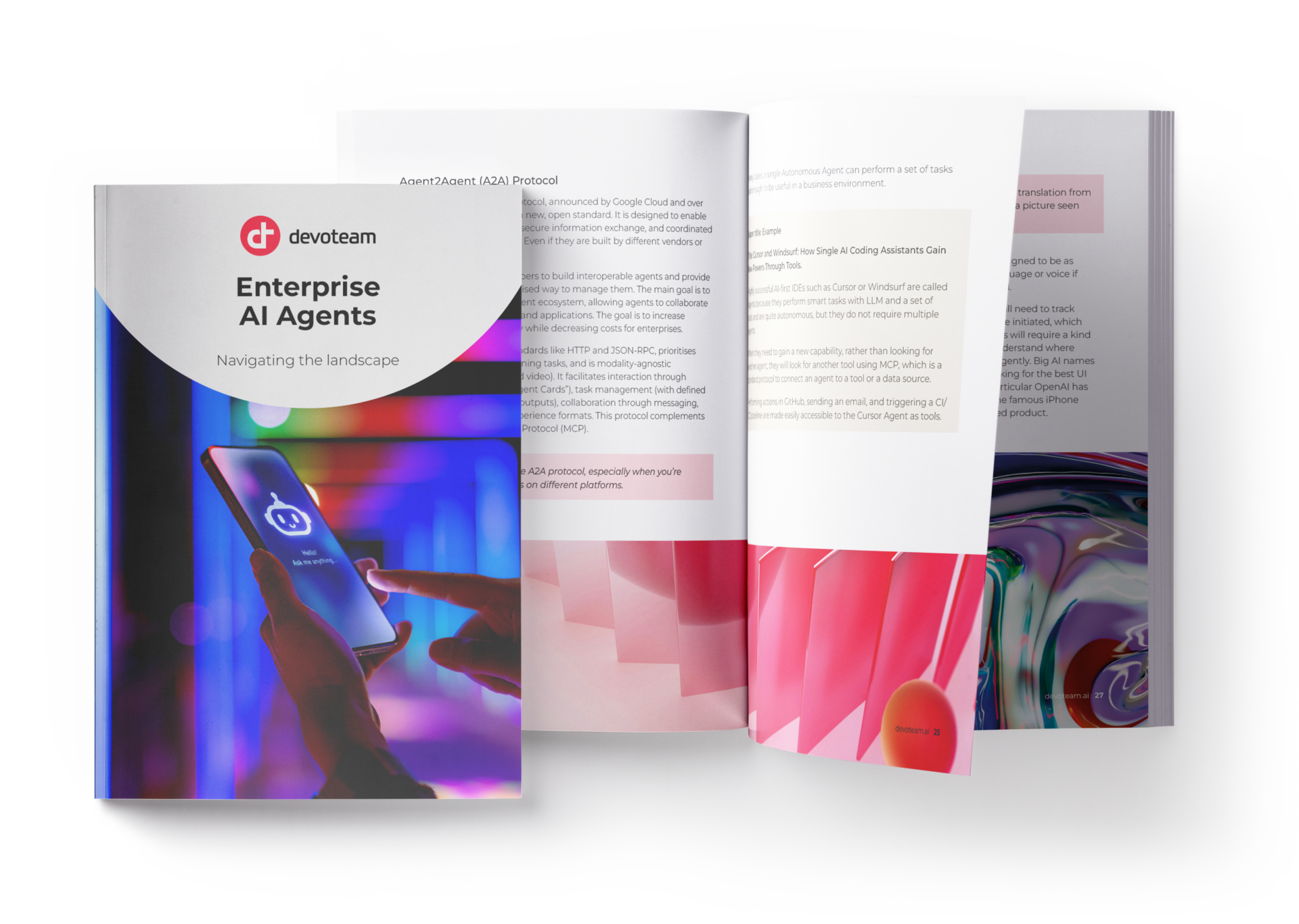
This playbook offers practical advice on Enterprise AI Agents. It brings insights from our 1,000+ AI consultants and their work on over 850+ AI projects.
Use it to:
- Understand the different flavours of AI Agents, from embedded to custom-built.
- Accelerate Adoption when combining quick-win MVPs with a strategic enterprise-wide rollout.
- Implement effective strategies for Trust, Risk, and Security Management (TRiSM).
- Decide between building custom AI Agents and buying off-the-shelf solutions for optimal impact.
From Assistants to Agents: The Natural Evolution of AI at Work
Over the past few months, we’ve seen how tools like Microsoft 365 Copilot and Google Gemini have helped users compose emails, summarise reports, code, and analyse data. They’re powerful assistants, but still focused on individual tasks.
We are now entering a new era: the era of agents, which not only execute tasks but can also make decisions, collaborate with each other, and work autonomously to achieve goals.
What Is the Difference Between an Agent and an Assistant?
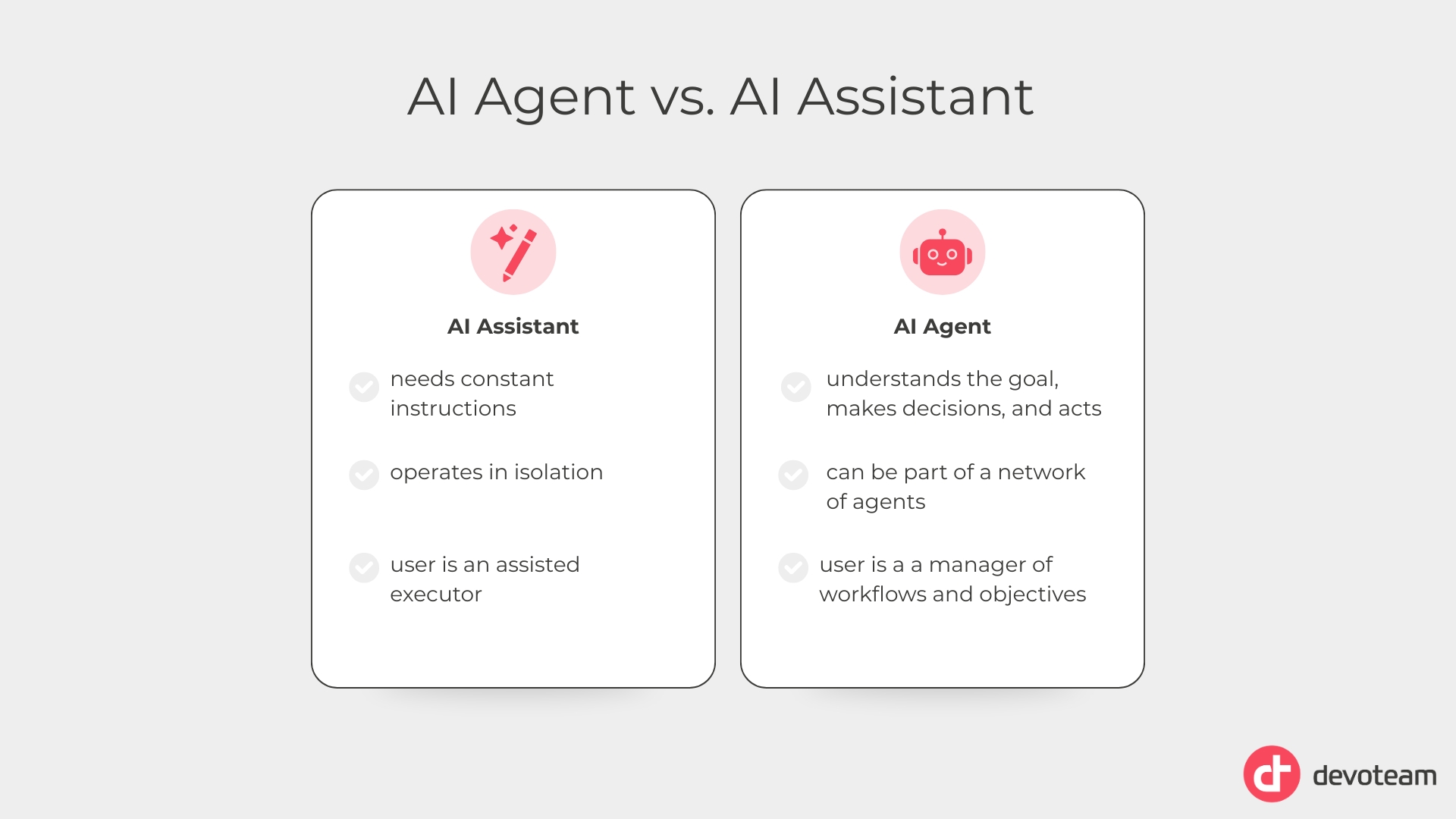
- An assistant needs constant instructions. An agent understands the goal, makes decisions, and acts.
- An assistant operates in isolation. An agent can be part of a network of agents working together.
- The user goes from being an assisted executor to a manager of workflows and objectives delegated to agents.
Three stages toward agent leadership
The change from AI agents to AI assistants doesn’t happen overnight. We can identify three levels of maturity in the relationship between humans and AI:
1. Personalised assistance
The user works with an agent who assists them with specific tasks: writing, searching, summarising, analyzing. This increases individual productivity.
2. Coordination of agents
The user leads several specialised agents who work in parallel, automating more complex processes, such as reporting, approval workflows, or data analysis.
3. Head of agents
The user acts as an orchestrator of complete business processes, delegating to an ecosystem of collaborating agents. The person takes on the role of supervision, review, and decision-making.
This model requires new capabilities: strategic thinking, AI governance, results evaluation, and change management .

Via 2025: The year the Frontier Firm is born
Impact on Productivity
McKinsey’s report, Seising the Agentic AI Advantage, estimates that AI agents can generate productivity gains of between 20% and 60% , depending on the industry and the degree of adoption.
It also offers a guide to getting started:
- Cross-functional use cases: agents applied to common functions such as reporting, customer service, or content generation.
- Department-specific projects: agents trained for specific tasks in areas such as finance, marketing, operations, or human resources.
This step-by-step approach allows you to start tactically and progress to strategically, with a gradual learning curve.
Where Are We Now? The State of AI Maturity in Organisations
Today, most organisations fall between the first two levels of maturity. AI is already capable of understanding context, language, and knowledge, but it is only now beginning to develop more complex planning and execution capabilities.
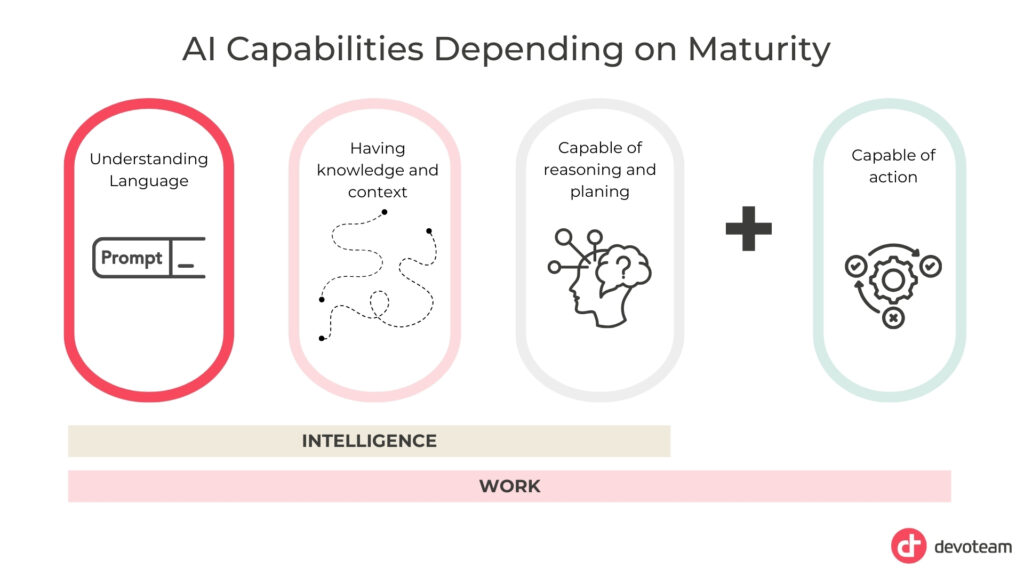
In this process, we can identify three key levels:
1. Increased individual productivity
Use of specialised assistants and agents for specific tasks: editors, analysts, visual generators, etc.
2. Process transformation
Business process automation using agents connected to internal systems, capable of executing tasks without direct human intervention.
3. AI at the organisational level
Multi-agent solutions that enable the redesign of complex processes such as customer lifecycle management, supply chain management, and resource planning.
At this final level, AI not only supports the business, but it also transforms it.
Leading This Transformation: Vision, Strategy and Action
The transition to an agent-based organisation requires more than technology.
You will need to:
- Define a clear AI adoption strategy , with measurable objectives.
- Establish governance models to ensure ethical, responsible, and business-aligned use.
- Train teams in new skills : agent supervision, prompt design, results analysis.
- Promote a culture open to change , where AI is seen as an ally and not a threat.
Conclusion
The question is no longer whether AI agents will arrive, but whether we are ready to work with and lead them. Organisations that begin exploring, experimenting, and scaling these solutions today will be uniquely positioned to face the future. The immediate challenge is practical: start small, learn fast, and scale intelligently. Read our full guide to navigate the Enterprise AI Agents landscape.
The key is to begin building the necessary leadership capabilities today. By defining a clear strategy, training your teams, and promoting a culture of experimentation, you lay the groundwork for a future where AI agents are not just tools, but integral collaborators in your success.
Sources:
Is your workforce ready to manage AI agents?
Partner with Devoteam to access experienced AI consultants and the best AI technologies for tailored solutions that maximise your return on investment. With over 1,000 certified AI Consultants and over 300 successful AI projects, we have the expertise to meet your unique needs.