


Written as part of our AI Upskilling Program
This article was created as part of the Global Devoteam AI Upskilling Program, where employees share their knowledge to accelerate their learning. The program’s key objective is to provide a foundation in AI for every employee and apply these new skills in our work. Do you want to work with us? Check out our career opportunities.
Product leaders are using AI to radically accelerate the earliest stages of data product planning. AI condenses what once took days of workshops and analysis into seconds. By feeding custom AI agents with project goals, stakeholder interviews, and technical constraints, teams can instantly generate foundational documents like product visions, value propositions, and initial roadmaps. This makes AI a strategic co-pilot from the very start of a product’s lifecycle.
This AI approach makes the visioning stage of product development a lot easier. Rather than piecing together feedback by hand, teams can use AI to build a structured plan immediately. The result is less ambiguity, time savings, and a confident start to development.
The lifecycle of a data product in an agile environment

The above Data Product Workflow illustrates the lifecycle of a data product — from the initial vision through to implementation and ongoing evolution. It is structured as a cycle rather than a linear process, allowing for continuous adaptation and feedback. Product managers divide the typical workflow into three interlinked phases:
- Product Visioning
- Backlog Management
- Implementation & Deployment
Each phase plays a crucial role in ensuring the final product delivers value and meets both strategic goals and user expectations.
Scrum, an agile framework, is particularly valuable within this workflow. Its iterative structure supports continuous learning and rapid adaptation, both of which are essential in dynamic, data-intensive projects. By breaking down complex initiatives into manageable sprints, Scrum encourages regular feedback and enables teams to pivot based on new insights or shifting priorities. This makes it especially well-suited to environments where requirements evolve quickly — such as AI- and data-driven initiatives.
The product visioning phase
The Product Visioning phase is foundational. Here, the team defines the high-level direction, value proposition, and user focus of the data product. This phase involves collaboration between stakeholders, product owners, and key personas, ensuring alignment with real business needs.

The main output of this phase is a product roadmap — a high-level plan that outlines the strategic direction over time. But to get there, you typically have to develop several other artefacts:
1. Product Vision
A product vision is a concise document that explains the “why” behind the product: the purpose it serves and the change it aims to deliver. It aligns all stakeholders around a shared goal.

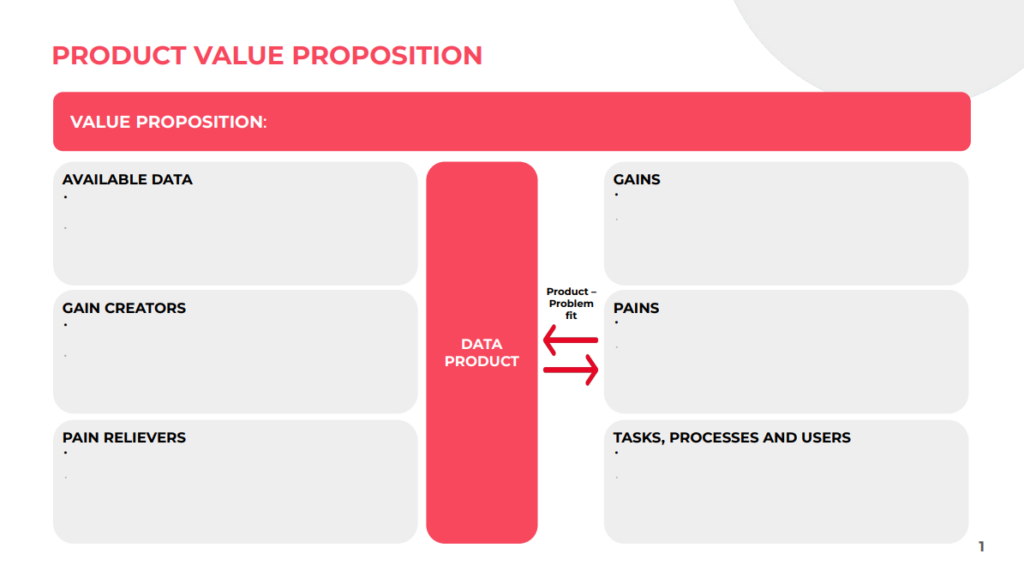
2. Value Proposition
A value proposition clearly articulates the benefits the product will deliver to its users and stakeholders. It informs design decisions, marketing strategy, and prioritisation.
3. Stakeholder and Persona Profiles
These define the key individuals impacted by or involved in the product. Understanding their goals and challenges is essential for relevance and adoption.
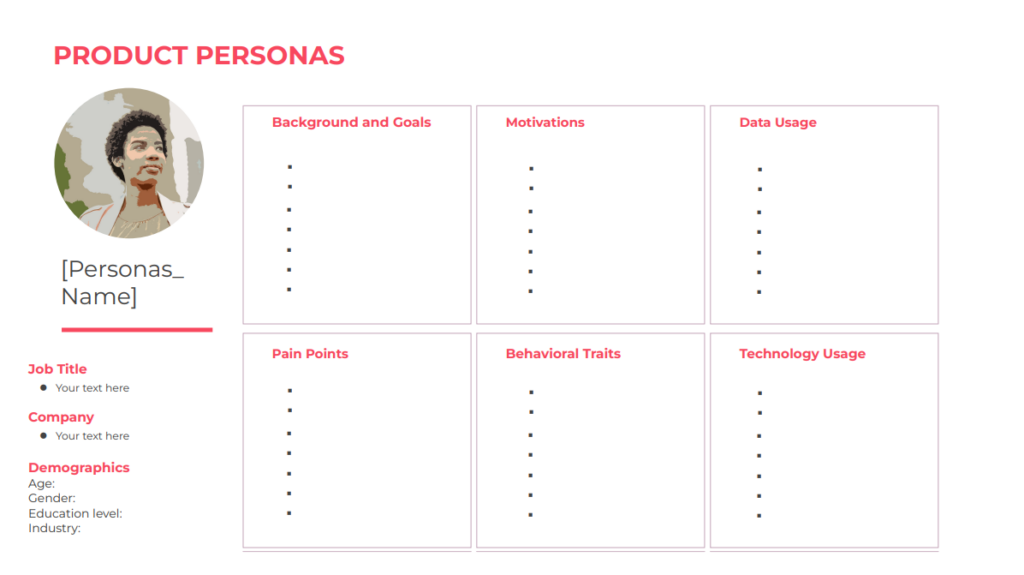
Together, these artefacts create a structured foundation for product development. They enable collaboration, support stakeholder engagement, and ensure all activities remain aligned to a validated vision.
GenAI’s role in the product planning and visioning process
1. GenAI support wit Custom ‘GPTs’ or ‘Gems’
You can increasingly use AI tools like Gemini (via GEMs) and ChatGPT to support the product visioning process. The role of AI here is not to replace human expertise, but to accelerate ideation, structure information, and improve alignment — all while maintaining space for creativity and strategic thought.
By automating repetitive tasks and synthesising large inputs into meaningful outputs, AI enables product teams to work smarter and faster. This is particularly valuable when time is short, information is fragmented, or the product scope is still evolving.
2. Using GEMs or Custom GPTs in GenAI Chatbots to support product planning
GEMs (Generative Experience Modules) are AI-powered agents designed to support specific processes. In the context of product visioning, GEMs can help with everything from persona definition to initial roadmap creation.
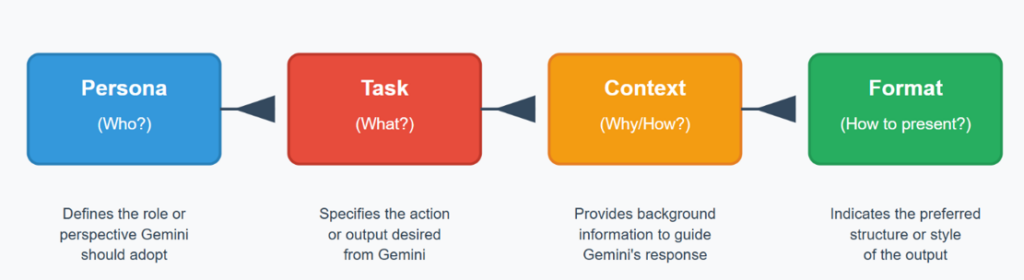
To make Gemini GEMs effective, you should structure them around four key components:
- Persona – Defines the AI’s role. For example, the GEM used here was set up as a senior Data Product Owner at Devoteam, ensuring expertise in data product planning was embedded in its responses.
- Task—Specifies the objective, e.g., assisting in creating artefacts such as the Product Vision, Value Proposition, and Initial Roadmap.
- Context – Provides the GEM with the necessary background, including client objectives, known constraints, data ecosystem details, and strategic intent. This helps generate relevant, accurate outputs.
- Format – Defines how the output should be presented (e.g., bullet points, plain language, structure suitable for client presentations).
This structure ensures clarity, consistency, and usability — making GEM outputs highly actionable from the start.
3. Project-specific inputs for Generative AI Chatbots:
To maximise value, GEMs should be fed with rich, project-specific inputs. This includes:
- Product goals, business outcomes, and known pain points
- Target user profile, including analytical needs and decision-making contexts
- Details of the data landscape: source systems, integration, and ingestion pipelines
- Non-functional requirements: frequency, latency, quality, and compliance
- Technical architecture: from ingestion to modelling and visualisation
- Delivery planning: team structure, cadence, and capacity
- Risks and dependencies: especially around data readiness
- Validation criteria: quality benchmarks, stakeholder sign-off, and alignment to priorities
With these inputs, GEMs can generate structured, insightful outputs in seconds — something that would normally require several workshops and days of analysis.

Work Smarter & Faster with Gemini
Gemini for Google Workspace: A Guide with 30+ Use Cases for Marketers, Sales, HR & Procurement Professionals

Putting AI in Product Planning to Work: Start Experimenting Now
GenAI tools like GenAI Chatbots are powerful accelerators in early-stage product planning. In a recent use case, a Gemini Gem processed and structured multiple days’ worth of interviews and notes in under a minute. While the output still required human refinement, the time saved and clarity gained were significant.
Product leaders looking to gain speed, structure, and strategic insight should consider incorporating AI tools into their visioning practices. The benefits are immediate — but the long-term impact is even more valuable.
To explore how AI can further amplify your approach, consider reading Augmented Product Owner: Amplifying Scrum with AI.
If you’re exploring how to elevate your data product strategy with AI, it’s equally important to ensure you’re working with the right partner. A successful data-driven transformation requires more than just the right tools – it demands the right expertise. For guidance on selecting a strategic partner who can support your vision end-to-end, read our expert article: How to Select a Data Partner for Your Data-Driven Transformation.