



In Customer Service Management (CSM), the primary goals have always been to enhance customer experience satisfaction and improve agent efficiency in resolving issues.
The new ServiceNow Yokohama release addresses those by streamlining agent workflows towards an ‘ALL IN ONE WORKPLACE’ and leveraging AI to alleviate time constraints. It is worth mentioning that AI Agent’s functionalities play a key role in boosting efficiency and elevating customer satisfaction.
Now, let’s take a look at some of the key highlights of this release.
Contact Center as a Service (CCaaS) integration
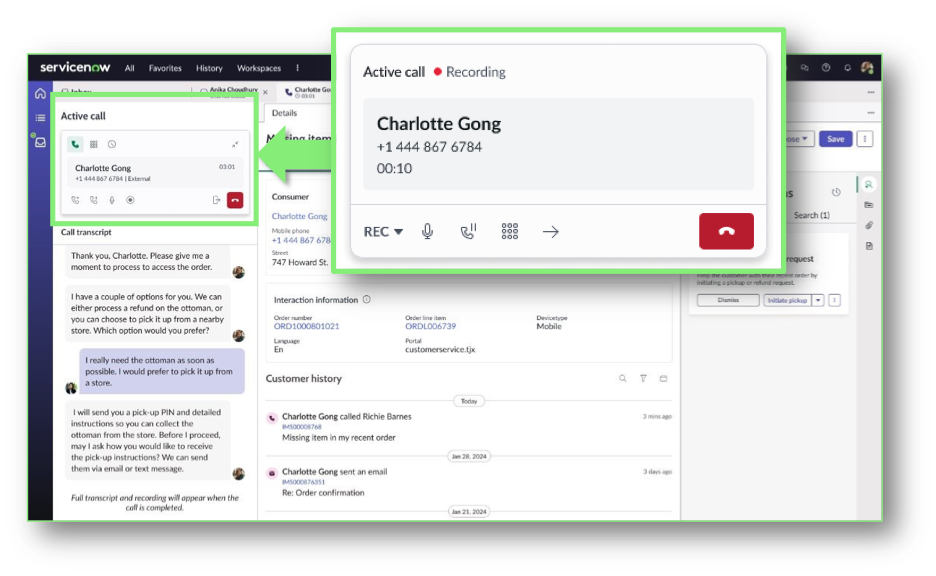
If your customer service agents still juggle multiple platforms to handle calls, record interactions, create tickets and search for solutions, then you’re going to like the new update.
In the Yokohama release, ServiceNow facilitates data import from third-party Contact Center as a Service (CCaaS) applications. This integration minimises platform switching, significantly enhancing agent’s productivity and reducing inconveniences associated with channel transitions.
This integrated approach improves overall customer satisfaction, empowering agents with a unified toolset that optimises their workflow and effectiveness.

AI customer scheduling
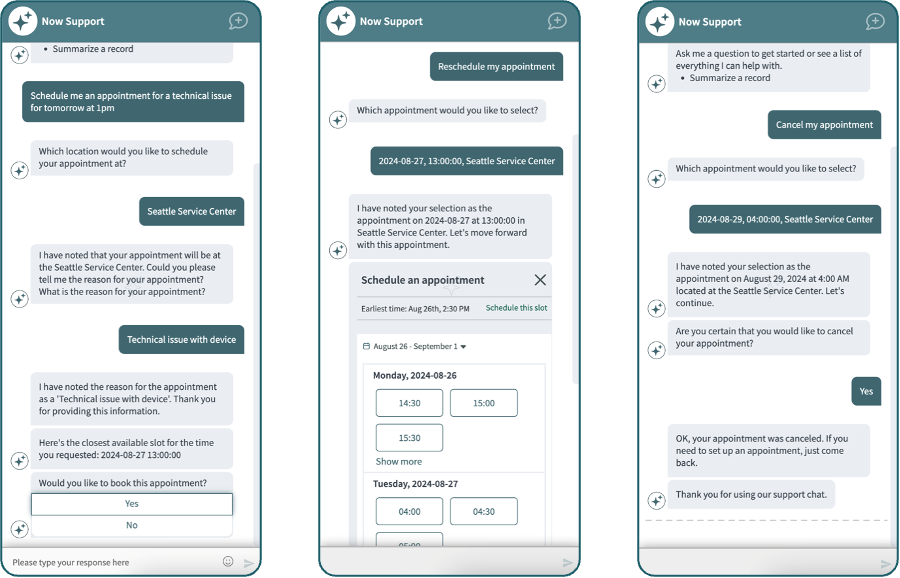
Customer service lines are frequently overwhelmed by reservation changes, cancellations, and reschedules. Clients often face frustrating delays while trying to find available slots and experience long wait times for agent assistance. These lengthy processes and wait times are a significant source of customer dissatisfaction.
The Yokohama release utilises the latest AI advancements to enhance ServiceNow’s real-time customer support capabilities. AI agents allow customers to independently schedule and change appointments, which allows agents to prioritise critical issues. The key benefits include:
- strengthened customer relationships
- streamlined workflows
- reduced response times
AI Agents enhancing portal case form interactions
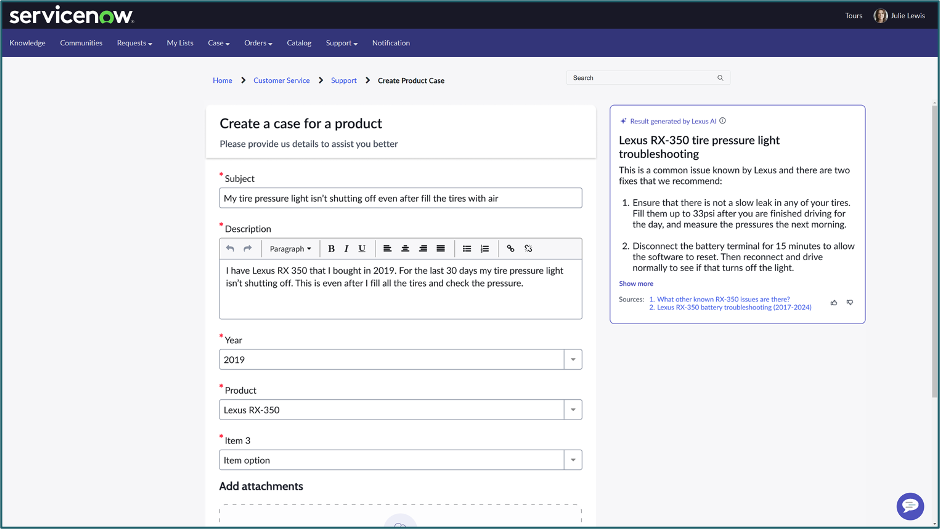
Although AI agents aim to facilitate quick customer issue resolution, customers often struggle to articulate their problems through portal request forms. This results in two common scenarios:
- Agents must repeatedly contact customers for clarification of their issues.
- Customers attempt to self-resolve through knowledge bases, which can lead to frustration and inaccurate information.
In response to the demand for a more user-friendly portal, the Yokohama release introduces AI-driven intelligent answers in case forms. Customers now receive direct, contextually relevant answers, eliminating the frustration of navigating through numerous links. This enhancement results in a more efficient self-service experience and improved customer satisfaction.
Conclusion
In conclusion, the ServiceNow Yokohama release marks a significant step forward in Customer Service Management by directly addressing the core objectives of enhanced customer experience and improved agent efficiency. The strategic implementation of AI, particularly through AI Agents for customer scheduling and intelligent answers within portal case forms, promises to alleviate time constraints for agents and provide customers with more autonomy and immediate, relevant support. By streamlining workflows, reducing response times, and offering intuitive self-service options, the Yokohama release has the potential to foster stronger customer relationships and drive a more efficient and satisfying customer service experience overall.
The Generative AI capabilities enhancing customer service are part of a much broader, platform-wide innovation in the Yokohama release. To see how this same powerful technology is being applied to other business-critical functions, explore our insights on supercharging Security Operations with GenAI.

Learn more about transforming customer relationships with ServiceNow CRM!